You wipe down the bench, spray the ants you can see and feel reasonably confident you've solved the problem. Then, a few days later, another trail appears.
The frustrating part is that your kitchen might be perfectly clean.
The ants walking across your benchtop are usually just workers from a much larger colony. Killing the ones you can see doesn't necessarily stop the colony from sending more.
Getting ant activity under control means understanding what they're looking for, where they're coming from and which species you're dealing with.
Why Do Ants Keep Returning to the Same Spot?
Ants communicate using chemical trails. When a worker discovers food, other ants can follow its route, which explains those remarkably organised lines along skirting boards, window frames and kitchen benches.
Wiping the surface may disrupt the trail, but the colony remains active. If food or water is still available, workers can establish another route.
Some species are particularly persistent because they establish multiple nesting sites. Common black ants and coastal brown ants, for example, may continue appearing from surrounding areas even after activity in one location has been reduced.
That is why identifying the species is an important part of choosing an effective treatment.
What Can You Do Before Calling Pest Control?
The first step is to watch where the ants are travelling.
Are they entering near a window? Following the edge of a cupboard? Gathering around the sink? Knowing where activity begins and what attracts them can help identify the problem.
Next, remove the sources they're visiting.
Food crumbs beneath appliances, spills inside cupboards, pet bowls and unsealed pantry products can all attract ants. Store food in sealed containers, clean regularly used feeding areas and keep rubbish bins closed.
Don't overlook moisture. A leaking pipe beneath the sink or persistent condensation around an appliance can provide a water source even when there is no food nearby.
These measures can reduce ant activity, but they may not eliminate an established colony. If the ants keep returning, the problem is likely to extend beyond what you can see in the kitchen.
Why Isn't Household Ant Spray Always Effective?
A household insect spray can kill ants on contact, which makes it tempting to spray every new trail.
The limitation is that the visible insects are only part of the colony.
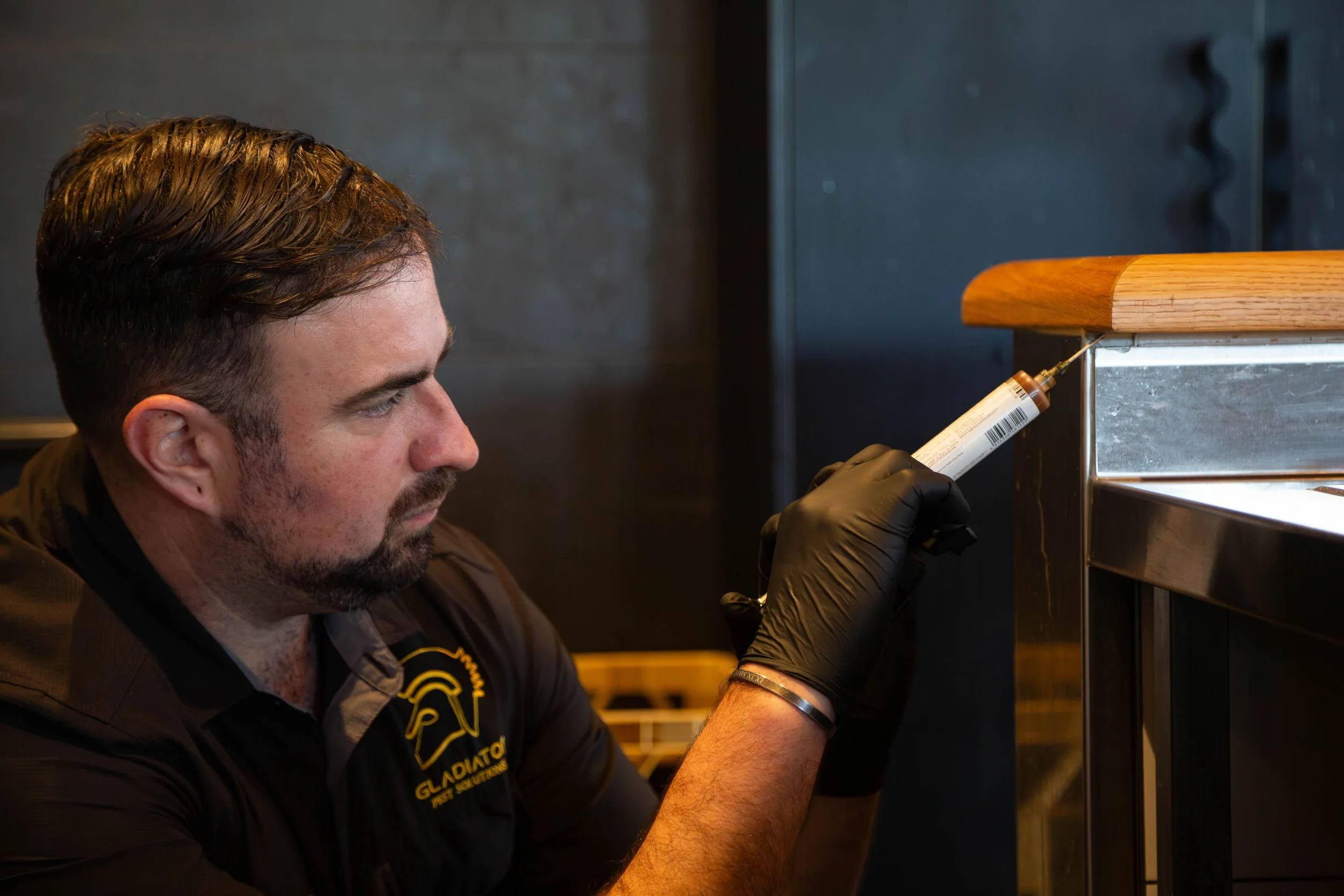
Professional treatments may use baits or targeted applications selected according to the species and location. Some baits are designed to be carried or shared by foraging ants, helping treatment reach activity that isn't directly accessible.
But not every bait appeals to every ant species. Feeding preferences and colony behaviour vary, which is another reason generic treatments can be disappointing.
The objective isn't simply to kill more ants. It's to use an approach suited to the colony responsible for the infestation.
What If Ants Return After Professional Treatment?
Ant treatments don't always produce an immediate disappearance of activity.
Gladiator's treatment guidance explains that some common ants may initially become more active after treatment because they have been disturbed. If the situation hasn't improved after 21 days, customers are advised to contact the team.
It's also important to understand the limitations of controlling ants in an outdoor environment. Some species maintain multiple nests, and colonies in neighbouring gardens may continue producing foraging ants.
That doesn't mean treatment has been unsuccessful. It means the appropriate goal may be to reduce and manage activity rather than promise that no ant will ever enter the home again.
For properties with persistent problems, preventative servicing may be worth considering alongside improvements to food storage, moisture control and access points.
Gladiator Pest Solutions provides ant control across the Sutherland Shire and Sydney's Eastern Suburbs, with treatments tailored to the species and conditions of each home.